
Algorithms are reshaping how we connect online, often at the cost of genuine relationships. Social media platforms use algorithms to show content tailored to your behavior, prioritizing engagement metrics like likes and shares over meaningful interactions. This leads to shallow connections, echo chambers, and reduced exposure to diverse perspectives.
Key Takeaways:
- 98.99% of UAE residents (around 9.7 million people) use social media, spending an average of 2 hours 50 minutes daily.
- Algorithms focus on keeping you engaged for profit, not fostering deep relationships.
- 3.95 million UAE users aim to connect with family and friends on social media, but algorithms often prioritize viral content over personal sharing.
- Excessive online time replaces face-to-face interactions, weakening traditional bonds and increasing loneliness.
To reclaim genuine connections, adopt intentional digital habits, limit screen time, and explore platforms like SureSpace, which prioritize authentic relationships over algorithms.
How Algorithms Work: Engagement vs. Connection
How Algorithms Put Engagement First
Social media platforms handle an overwhelming amount of content daily – Twitter alone processes around 500 million posts every day. To manage this flood of information, algorithms step in, deciding which posts make it to your feed based on what they predict will catch your attention. This immense filtering capability shapes much of our online experiences.
By monitoring metrics like likes, shares, comments, and watch time, these algorithms aim to maximise user engagement. And let’s be honest – this isn’t about creating enriching experiences; it’s about keeping you glued to the screen for as long as possible. Why? Because the longer you stay, the more ad revenue these platforms generate. Their primary focus is on boosting profits, not necessarily fostering meaningful interactions or promoting social well-being.
Different platforms have their own methods to push engagement. Facebook considers factors like timing, user demographics, and social connections. Instagram looks at how recent a post is and how often you interact with a user. Meanwhile, YouTube’s recommendation system drives over 75% of its total watch time . The outcome? Content creators are incentivised to churn out material that triggers quick reactions – likes, shares, and comments – rather than content that encourages deeper thought or genuine connections.
But this relentless chase for engagement isn’t without consequences. It often comes at the expense of mental health and authentic human connection.
The Mental Impact
These engagement-driven algorithms don’t just shape your feed; they influence how you think, interact, and even feel. By prioritising sensational, high-performing content, these systems can lower the overall quality of what we consume. Thoughtful discussions and nuanced perspectives often take a back seat to flashy, emotionally charged material.
One of the most concerning effects is the creation of echo chambers. Algorithms personalise your feed so effectively that they reinforce your existing beliefs, isolating you from alternative viewpoints. This is particularly troubling in a multicultural society like the UAE, where fostering dialogue and understanding among diverse communities is a core value. While the nation’s leadership works to promote inclusivity and tolerance, algorithmic echo chambers risk undermining these efforts by unintentionally amplifying biases and reducing opportunities for meaningful cross-cultural interaction.
Research from the UK shows that 6–8% of users find themselves trapped in partisan echo chambers, where their existing views are constantly reinforced. On top of that, the unpredictable nature of viral content creates a kind of psychological dependency. Users keep coming back, chasing the fleeting rewards of likes and shares, but these interactions are often shallow and fleeting. Algorithms exploit our natural tendency to react quickly and emotionally, favouring content that triggers instant gratification over the kind of thoughtful communication that fosters long-term relationships.
There’s also the pressure to present a polished, idealised version of yourself online. Algorithms reward content that fits their engagement metrics, pushing people to curate their lives for likes and approval. Over time, this can stifle authenticity and make it harder to form genuine, meaningful connections. Becoming aware of how these systems influence our behaviour is a critical step toward reclaiming control of our digital lives and resisting the pull of superficial engagement.
Effects on Relationships
Shallow Interactions and Social Comparison
The pursuit of online engagement often swaps meaningful conversations for fleeting reactions. Instead of thoughtful dialogue, we find ourselves measuring relationships by the number of likes or emojis we receive. This shift fosters an environment where connections feel increasingly surface-level.
This cycle is driven by how social media platforms operate. As Valeria G from Reputation Sciences explains:
Social media algorithms shape user experiences on platforms like Facebook, Instagram, and Twitter. They curate content based on user interests by analysing behaviour and ranking signals such as engagement and relevance.
These algorithms prioritise content that sparks quick, emotional responses, often at the expense of genuine, meaningful interaction.
Adding to this, social media amplifies constant comparison. Platforms spotlight the most exciting and polished moments from others’ lives – vacations, achievements, or celebrations – leaving us to compare our everyday struggles with these curated highlights. This can distort how we perceive both our own lives and our relationships.
The numbers reveal the scale of this phenomenon. With Facebook boasting 2.5 billion active monthly users, it’s clear that these algorithm-driven interactions are shaping how we connect. The emphasis on likes, shares, and comments encourages content designed to gain validation, often sidelining sincerity and depth. This creates a culture where popularity overshadows authenticity.
Over time, this type of engagement spills into offline interactions, making real-world connections feel less fulfilling.
Online Time vs. Face-to-Face Relationships
The growing time spent online comes at the expense of in-person relationships. On average, UAE residents spend 2 hours and 50 minutes daily on social media. This level of digital engagement is gradually replacing face-to-face interactions, a cornerstone of Emirati culture.
Studies highlight the impact of this shift. A 2021 study in Saudi Arabia found that 59% of participants reported negative effects on family relationships and friendships due to prolonged social media use, with many finding in-person communication increasingly difficult. This trend is particularly troubling in societies like the UAE, where family and community ties are deeply valued.
The constant pull of digital distractions weakens emotional bonds, reducing empathy and trust in personal interactions. This erosion of in-person connections clashes with the UAE’s strong emphasis on community values and traditions.
Ironically, while 3.95 million UAE residents cite strengthening family and friend connections as their primary reason for using social media, excessive time on these platforms often has the opposite effect. Virtual interactions are replacing traditional gatherings, altering the social fabric rooted in Emirati traditions.
This imbalance is further compounded by the instant gratification provided by likes and comments. These quick dopamine hits make real-world conversations – requiring patience, active listening, and emotional effort – feel less rewarding. Over time, the skills needed for deep, meaningful relationships give way to the pursuit of the perfect post or emoji.
The mental health impact is significant. Clinical psychologist Alexandra Hamlet, PsyD, explains:
The less you are connected with human beings in a deep, empathic way, the less you’re really getting the benefits of a social interaction. The more superficial it is, the less likely it’s going to cause you to feel connected, which is something we all need.
This disconnect – despite constant online connectivity – has contributed to rising rates of anxiety, depression, and loneliness, particularly among younger generations growing up in a world shaped by algorithms.
Social Media Algorithms Are Manipulating Human Behaviour
sbb-itb-a45ffa4
Strategies for Intentional Digital Use
Using digital platforms with purpose can help cultivate genuine connections and promote healthier habits.
Managing Content and Screen Time
To reduce the mental strain caused by algorithm-driven echo chambers, consider adopting habits that improve your online experiences.
Start by monitoring your digital consumption and setting clear boundaries for screen time. For example, you could avoid work emails after 19:00, dedicate certain days to being technology-free, and power down devices 1–2 hours before bedtime. These practices not only improve work-life balance but can also help ease anxiety.
Take control of your online environment by unfollowing or muting accounts that evoke negative emotions. As digital wellness experts J. Black and G. Enns explain:
"Boundaries are a life enhancing system of ‘yes’ and ‘no.’ They are stop signs and borders you install to protect yourself so that it is clear that you own your life, make good choices, and pursue the authentic expression of who you are in the way you live, love, give and relate."
Making these changes can be simpler with the help of tools. Turn off notifications to minimise distractions, use apps to track your screen time, or even lock your devices during specific hours to encourage more intentional use.
Joining Community-First Platforms
Beyond personal habits, engaging with platforms that prioritise meaningful interactions can help counteract the isolating effects of algorithms.
Look for platforms that encourage thoughtful conversations rather than chasing engagement metrics. By focusing on authenticity – whether through active listening or sharing content that feels meaningful – you can cultivate stronger relationships.
Seek out platforms with robust community guidelines, tools for respectful dialogue, and moderation systems that ensure inclusivity. These features promote spaces where diverse voices are heard, collaboration is encouraged, and social bonds are strengthened. Together, intentional personal habits and well-designed community platforms can pave the way for more meaningful and sustainable online interactions.
SureSpace Community App: A Solution for Real Connections
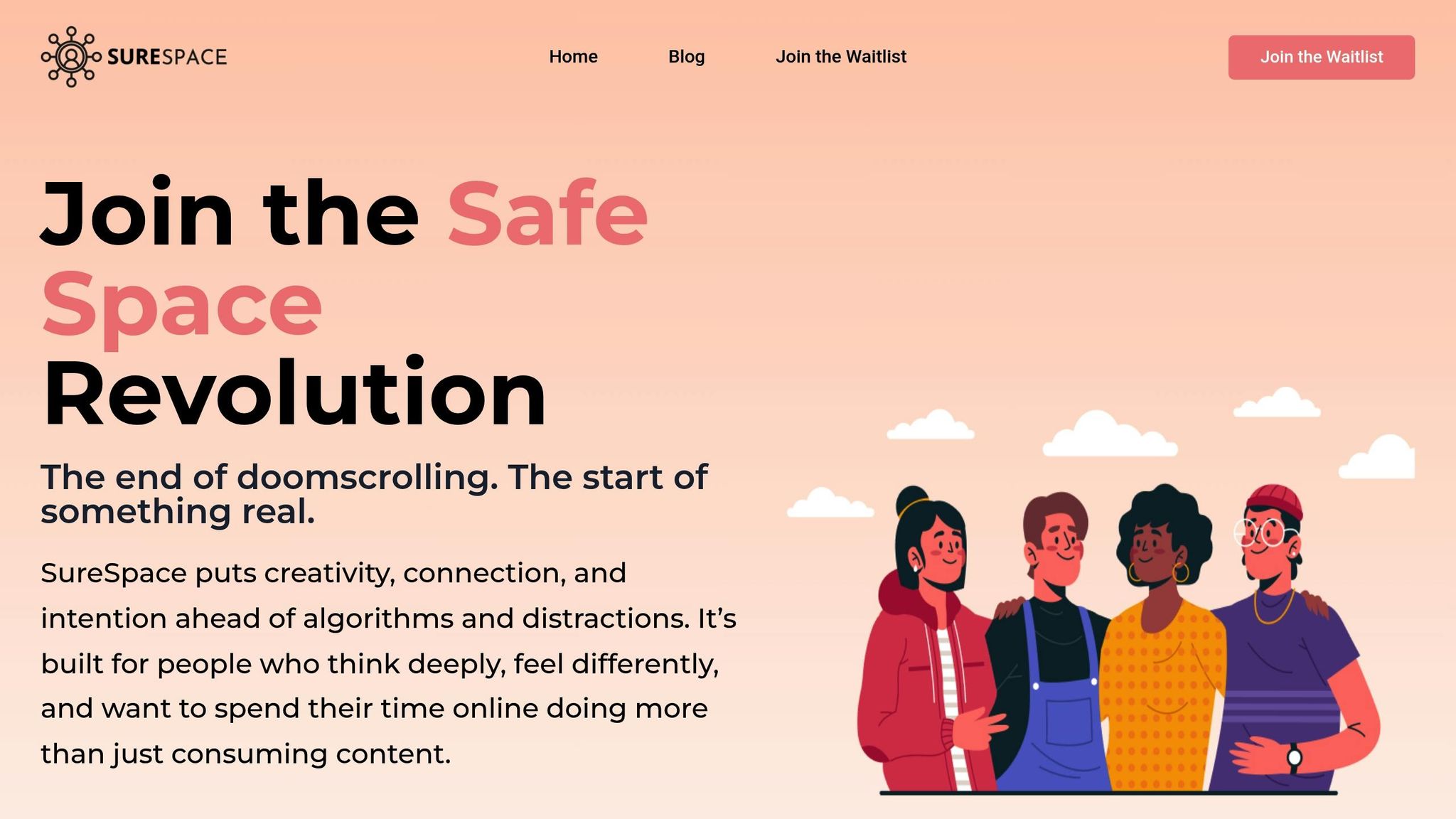
Social media often feels like a whirlwind of likes, shares, and endless scrolling, where genuine relationships take a backseat to engagement metrics. Enter the SureSpace Community App, a Dubai-based platform with a refreshing focus on building meaningful connections. Unlike traditional platforms driven by algorithms that prioritise screen time, SureSpace puts the spotlight on community and authentic interaction.
Instead of trapping users in a loop of superficial content, SureSpace empowers them to create a personalised, distraction-free digital space. This approach not only combats doomscrolling but also avoids the social comparisons that are so common on other platforms.
Features That Promote Real Engagement
SureSpace is built with features that encourage deeper, more genuine interactions. Its video-first design allows users to express themselves in a way that feels more personal and authentic, all within a moderated and secure environment. This focus on video communication moves away from vague text-based posts, fostering real conversations.
The app also offers topic-specific feeds, creating dedicated spaces for discussions around shared interests. Whether you’re exploring Dubai’s local events or collaborating on global creative projects, these curated feeds make it easier to connect with like-minded individuals. This sense of belonging and shared purpose is a welcome change from the chaotic timelines of algorithm-driven platforms.
Another standout feature is SureSpace’s unique approach to content moderation. By combining human oversight with advanced technology, the platform ensures a safe and respectful space for users. This method not only builds trust but also gives users a sense of ownership within the community.
On the business front, SureSpace takes a user-first approach. Instead of monetising personal data, the app generates revenue through ethical advertising and optional premium features. This ensures that users aren’t treated as products, and their privacy remains a top priority. It’s no surprise that 85% of SureSpace users report greater satisfaction with their online interactions compared to traditional platforms.
These thoughtful features align beautifully with the UAE’s values, which emphasise community and trust, making SureSpace a standout choice in the region.
Alignment with UAE Values
SureSpace doesn’t just offer innovative features – it reflects the UAE’s cultural priorities. The UAE is known for its strong sense of community and its emphasis on real human connection. SureSpace mirrors these values by creating a digital space rooted in authenticity and mutual respect.
The platform also aligns with the UAE’s progressive approach to technology and privacy. In a region where social media usage is expected to reach 112.5% penetration by 2025, transparency and user empowerment are more important than ever. SureSpace’s commitment to these principles ensures it resonates deeply with the local audience.
Beyond privacy and transparency, SureSpace champions collaboration and self-expression. Features like community sharing and constructive feedback systems encourage users to support one another and celebrate diverse perspectives. This positivity reflects the UAE’s cultural values of hospitality and mutual respect.
The app also promotes a slower, more intentional approach to digital consumption. By encouraging users to focus on discovery, creation, and meaningful connections, SureSpace offers a calm and focused alternative to the chaos of traditional platforms. For the UAE’s vibrant arts and innovation scene, this is a game-changer. Creative professionals and hobbyists alike can connect, share their work, and receive constructive feedback in a supportive environment. It’s a space where creativity thrives, free from the pressures of chasing likes and algorithmic approval.
Conclusion: Using Digital Spaces with Purpose
In today’s digital age, it’s still possible to maintain genuine connections despite the overwhelming presence of algorithms. By carefully selecting platforms that prioritise meaningful relationships, we can take back control of how we interact online and ensure our digital lives stay rooted in authenticity.
The numbers don’t lie. A 2023 advisory from the U.S. Surgeon General revealed that lacking social connections can harm health more than smoking fifteen cigarettes a day. Similarly, a Cigna survey found that 79% of adults aged 18-22 reported feeling lonely, compared to just 41% of those aged 66 and older. These figures paint a stark picture: while younger, tech-savvy generations may appear more "connected", they’re often struggling to form deeper, meaningful bonds. This highlights the pressing need for a more thoughtful approach to online engagement.
So, what’s the answer? It lies in using technology with intention. As Cal Newport aptly put it:
Technology is intrinsically neither good nor bad. The key is using it to support your goals and values, rather than letting it use you.
This involves making deliberate choices about how we engage online – prioritising quality over quantity in our interactions.
There are simple, practical ways to reshape your digital habits. Start by having focused conversations without the distraction of notifications. Be fully present during face-to-face interactions by keeping your phone aside. Regularly schedule digital detoxes to reconnect with yourself and those around you offline. And when you’re online, share honest feelings and practice empathy – this builds trust and fosters deeper connections.
For those in the UAE, this approach harmonises beautifully with the region’s values of community, hospitality, and mutual respect. The UAE’s unique blend of traditional Arab values and global influences creates fertile ground for platforms that support authentic relationships over algorithm-driven manipulation. This complements the earlier discussion on creating meaningful digital interactions and resonates deeply with the cultural fabric of the region.
If you’re in the UAE and looking for a digital space that mirrors these values, the SureSpace Community App is a standout option. With its community-first approach, the platform encourages real, meaningful communication and avoids exploiting user data for profit. Its focus on transparency, privacy, and fostering genuine engagement offers a refreshing alternative to conventional social media platforms.
Whether you’re connecting with loved ones, expanding your professional circle, or joining creative communities, the key is to approach these spaces with intention. By doing so, we can ensure our digital interactions truly enrich our lives and strengthen our human connections.
FAQs
How do social media algorithms create echo chambers, and what effects do they have on our interactions and perspectives?
Social media algorithms are designed to prioritise content that matches your interests and past behaviour. This creates echo chambers, where most of what you see aligns with your existing beliefs. While this might make your feed feel tailored to you, it also limits exposure to different perspectives and can contribute to polarisation.
The effects of these echo chambers can be far-reaching. They often amplify misinformation, reduce empathy for differing viewpoints, and may even lead to feelings of disconnection. Over time, this can shrink your understanding of the world and make meaningful conversations more challenging. By consciously exploring a wider range of content and being aware of your online habits, you can encourage more balanced and genuine interactions in your digital spaces.
How can I minimise the negative effects of algorithms on my relationships and mental well-being?
To lessen the impact of algorithms on your relationships and mental health, start by establishing clear limits for your digital habits. Set a cap on your daily screen time and pay attention to how you interact with online content. This can help you develop more balanced and mindful routines. Turning off non-essential notifications can also cut down on distractions, allowing you to stay more focused and present.
Make it a priority to invest in face-to-face connections by carving out time for offline activities. Whether it’s going for a walk, exploring a hobby, or enjoying moments with family and friends, these experiences not only deepen your personal relationships but also boost your mental well-being.
In a fast-moving digital landscape like the UAE, finding harmony between online interactions and personal wellness is crucial. By being thoughtful about your tech usage, you can maintain a healthier relationship with technology while building stronger, more meaningful connections.
Why should we adopt intentional digital habits to build stronger human connections?
In today’s digital age, being intentional with how we use technology is key to fostering meaningful human connections. By consciously shaping our digital habits, we can go beyond shallow interactions and build relationships rooted in trust, empathy, and sincerity.
Prioritising thoughtful digital practices helps us focus on quality rather than quantity in our online exchanges. This not only minimises distractions but also prevents feelings of detachment. The result? Genuine conversations that strengthen both personal bonds and professional connections.

