
In today’s hyper-connected world, many of us feel overwhelmed by constant notifications, endless scrolling, and blurred lines between work and personal life. Intentional digital living offers a way to regain control by using technology with purpose, not habit. This approach is especially relevant in the UAE, where internet usage reaches 99.15% and digital innovation thrives. The goal? To align your online habits with your values, improve productivity, and enhance well-being.
Key Takeaways:
- What It Is: Intentional digital living involves mindful tech use, focusing on purpose-driven actions rather than passive habits.
- Why It Matters: Excessive screen time leads to stress, wasted time, and reduced emotional well-being. In the UAE, government policies like the National Policy for Digital Wellbeing aim to address these challenges.
- Core Principles: Intentionality, awareness, and reflection help shape healthier digital habits.
- Practical Strategies:
- Set boundaries: Limit screen time, create tech-free zones, and manage notifications.
- Organize digital spaces: Clean up your inbox, files, and apps to reduce stress.
- Schedule screen-free periods: Take regular breaks to improve focus and relationships.
- Use tools like the SureSpace Community App to support meaningful online interactions.
By following these steps, you can reshape your relationship with technology, ensuring it supports your mental health, personal goals, and connections with others.
Simplify your digital life – for good | SUSTAINABLE steps for more minimalist & intentional tech use
Core Principles of Intentional Digital Living
Shifting from aimless scrolling to purposeful digital engagement starts with understanding a few fundamental principles. These ideas can help you shape a digital life that aligns with your goals and values, setting the stage for the strategies discussed later.
Principles of Mindful Technology Use
At the heart of intentional digital living is mindful technology use. This approach encourages using technology thoughtfully, in ways that enhance your well-being and create balance between your online and offline life.
Three key principles – intentionality, awareness, and reflection – guide this mindset. These principles encourage you to think critically about why you use your devices.
- Intentionality: This means having a clear purpose before picking up your phone or opening your laptop. For example, instead of scrolling through social media during lunch, you might spend 10 minutes catching up on updates from close friends or reading articles relevant to your career. Shifting from passive consumption to deliberate choices can completely transform how you experience the digital world.
- Awareness: Pay attention to how technology impacts your mood, energy, and relationships. Maybe you’ve noticed that scrolling through news first thing in the morning leaves you feeling anxious, while watching an educational video inspires you to tackle the day. This self-awareness helps you make better choices about how and when to engage with technology.
- Reflection: Regularly assess your digital habits. Reviewing your weekly screen time and considering whether your online activities align with your personal values can help you make adjustments as needed.
The numbers are striking: adults now spend over three hours daily on their phones, with Gen Z users averaging five hours. Without clear boundaries, this time can quickly slip away without adding anything meaningful to your life.
Common Challenges in Digital Spaces
Navigating the digital world isn’t without its challenges. Recognising these obstacles can help you address them more effectively.
One major issue is digital overwhelm, caused by constant information, excessive screen time, and blurred lines between work and personal life. The effects on mental health are significant. Research shows that 77% of Americans regularly experience physical symptoms of stress, while 73% report psychological symptoms. Even more alarming, 74% of adults have felt so overwhelmed in the past year that they struggled to cope.
Another reality of modern life: 28% of adults in the United States say they are "almost constantly online". Workplaces add to the problem, with frequent interruptions from emails and messages reducing productivity by as much as 40%.
Social media pressure is another challenge. Spending over four hours daily on social media has been linked to higher rates of depression and sleep problems. The comparison culture on these platforms can leave you feeling inadequate or disconnected from your true self.
Then there’s information overload. With endless streams of content competing for your attention, it’s tough to filter out what’s important. This constant input can lead to decision fatigue and make it harder to focus on meaningful tasks. Recognising these challenges is a vital first step toward implementing intentional strategies.
Setting Boundaries for Balanced Digital Life
Establishing boundaries can change your relationship with technology, helping you move from reactive habits to intentional use. The benefits are clear: people who set personal boundaries report 62% higher life satisfaction and 47% lower stress levels.
- Time boundaries: Define specific times for emails and social media to protect your personal time. For example, you might limit social media use to 08:00–09:00 and 17:00–18:00, avoiding the urge to check updates throughout the day.
- Digital curfews: Reducing device usage one to two hours before bed can improve sleep quality. Research shows that this practice can lower stress by 32% and improve sleep by 28%.
- Physical boundaries: Create tech-free zones in your home, like the bedroom or dining room, to encourage relaxation and face-to-face interaction.
- Notification management: Turn off non-essential notifications to minimise interruptions. For example, you might keep alerts for calls and family messages but disable social media and promotional notifications.
Adopt the "pause principle": before reaching for your device, ask yourself if it’s the best use of your time. This small moment of reflection can shift your actions from automatic to intentional.
- Work-life boundaries: In today’s always-connected world, it’s crucial to set clear work hours. Communicating your availability to colleagues can prevent work from encroaching on personal time. Employees with clear boundaries are 26% more engaged and 69% less likely to experience burnout.
As Dr. Dana Nelson explains:
"Most people fail at boundary-setting because they begin with the most difficult relationships."
Start small. For instance, limit your social media use before addressing more complex situations, like setting boundaries with colleagues or family members who might resist these changes.
Review your boundaries regularly – technology evolves quickly, and new platforms or apps may require adjustments. By pairing clear principles with effective boundaries, you can create a digital environment that supports your well-being and aligns with your personal goals.
Creating a Mindful Digital Environment
The way you organise your digital environment has a profound impact on your mindset, emotions, and online behaviour. Just like a cluttered room can overwhelm and hinder productivity, a chaotic digital space can do the same. Designing a mindful digital environment involves intentionally arranging your online spaces to support focus, minimise distractions, and reflect your personal values. Let’s dive into practical ways to tidy up your digital world.
Organising Your Digital Spaces
An organised digital space is key to maintaining focus and reducing stress. Decluttering your digital life doesn’t need to feel overwhelming – start small and work systematically.
Begin by taking stock of your digital footprint. Create an inventory of your devices, online accounts, cloud storage, and subscriptions. This gives you a clear picture of where you stand and helps you prioritise areas that need attention.
Focus on your most-used spaces first, such as your email inbox, cloud storage, and primary devices. These areas tend to have the biggest impact on your daily life, so cleaning them up can make a noticeable difference.
"A clean and organised digital environment can help you improve your productivity. It also reduces stress." – Sarah Bocchino, WEBIT Services
Start with your email inbox. Unsubscribe from newsletters you no longer read, set up filters to sort incoming messages automatically, and archive or delete emails that have outlived their usefulness.
"The inbox is not a storage unit for unloved emails." – Patty Kreamer, Productivity Coach
Consider using separate email accounts for different purposes – one for work, another for personal communication, and a third for shopping or subscriptions. This separation can help you stay focused in each context.
When it comes to your files, a systematic approach works best. Use clear folder names and consistent file naming conventions to make everything easy to find. For example, include dates in file names where relevant. Productivity coach Frank Buck shares his method:
"I use OneDrive as the place for storing digital documents. It’s like the ‘filing cabinet’ where I can find what I need. I use Dropbox for those things that are a work in progress. When something is ‘done,’ I move it from Dropbox to its new home in OneDrive." – Frank Buck
Don’t forget your smartphone. Organise apps into folders with clear labels like Work, Social Media, Health, or Entertainment. Frank Buck explains his strategy for keeping his phone tidy:
"The third screen holds folders in alphabetical order, including the following: Financial, Entertainment, Health, Home, Music, News, Restaurants, Shopping, Social Media, and Travel. The next holds miscellaneous apps that I do not access regularly." – Frank Buck
Regularly clear your desktop and downloads folder, as these often become cluttered with unused files. Move important items to their proper folders and delete what’s unnecessary.
Review your subscriptions monthly. Cancel services you no longer use to save money and reduce digital clutter. As Ravindra Kondekar points out:
"Despite the decreasing cost of digital storage, maintaining unnecessary data still incurs a hidden expense. Ask people who have run out of free space given by Google, which they never thought they would." – Ravindra Kondekar
Social media cleanup is equally important. Remove unused accounts, unfollow profiles that don’t add value, and clear out old messages. If unfollowing feels too drastic, consider muting accounts instead.
Finally, adopt the DRIFT policy (Do it Right The First Time) to manage digital clutter. As Ravindra Kondekar advises:
"Delete material such as email messages and unsubscribe to newsletters that you don’t need anymore when you are looking at one. Do not accumulate trash till that sunny day when you think you have a whole world of time to delete unwanted material." – Ravindra Kondekar
Tools That Support Intentional Use
Once your digital spaces are organised, the next step is to use tools that encourage mindful habits. The SureSpace Community App is a great example, designed for intentional digital living. It prioritises meaningful interaction over endless scrolling and algorithm-driven distractions.
"SureSpace creates a space for meaningful interaction, prioritising authentic connection over endless scrolling and algorithmic distractions." – SureSpace Community App
The app addresses a growing issue: nearly half of millennials and over half of Gen Z adults engage in frequent doomscrolling, with a significant portion developing problematic news consumption habits. This behaviour is linked to lower life satisfaction and mental well-being.
SureSpace promotes intentional use through features like a clean interface, calming colours, and thoughtful pacing to minimise overstimulation. Users can set intentions before logging in, encouraging reflection on their values. It also eliminates likes and follower counts, shifting the focus from performance to genuine connection.
Other tools can also help you maintain focus. Customise app notifications to limit alerts to only the most important messages. Use browser tools to organise bookmarks or set up multiple profiles for different purposes. Colour-coded calendars can also help you manage your time more effectively by visually separating work, personal, and social commitments.
Adding Screen-Free Periods
Taking regular breaks from screens is essential for your mental and physical health, as well as for nurturing relationships. These breaks can improve your mood, strengthen social bonds, and even enhance your overall well-being.
Research shows that children who avoided electronic devices for five days were better at recognising emotions and reading nonverbal cues compared to those who continued their usual screen habits.
Schedule daily screen-free times, such as during meals, family activities, or the hour before bed. These intentional breaks can help establish healthier habits without requiring constant willpower.
Bedtime routines, in particular, benefit from screen-free periods. Blue light from devices suppresses melatonin production, affecting sleep quality – especially in children. Aim to turn off screens at least two hours before bed and replace them with calming activities like reading or journaling.
Physical activity is another great way to fill time away from screens. Whether it’s a morning walk, yoga, or an evening bike ride, movement helps refresh both mind and body.
Engaging with your community is another meaningful alternative. Join local events, volunteer, or participate in hobby groups that match your interests. These activities not only reduce screen time but also enrich your life in ways that align with a more intentional lifestyle.
Building Real Online Connections
Creating meaningful relationships online goes beyond casual interactions – it requires effort, understanding, and respect. In the UAE, where over 99% of the population actively uses the internet, the digital world offers incredible opportunities to connect with people from various cultures and backgrounds. Let’s look at how communication strategies, platform features, and cultural awareness can help build genuine online connections.
Respectful and Empathetic Communication
The way we communicate is the cornerstone of any meaningful relationship. Online, where non-verbal cues are often missing, it’s essential to pay close attention to words and tone. Practising empathetic listening – acknowledging and validating emotions – can make a significant difference. Simple actions like paraphrasing key points or offering affirmations show that you’re fully engaged.
Before hitting “send,” take a moment to reflect on your words. Ask yourself if your response brings value to the conversation. Encouraging kindness and empathy in your interactions can inspire others to do the same. Research highlights that integrating empathy and active listening can turn tense conversations into constructive exchanges.
"Active listening requires de-centering from one’s fixed position to be fully present with another. It helps people feel more understood and strengthens relationships as it signals a willingness to sit with the other’s perspective and empathy for their situation instead of singular focus on oneself." – Sabrina Romanoff, PsyD
Leveraging SureSpace Community App Features
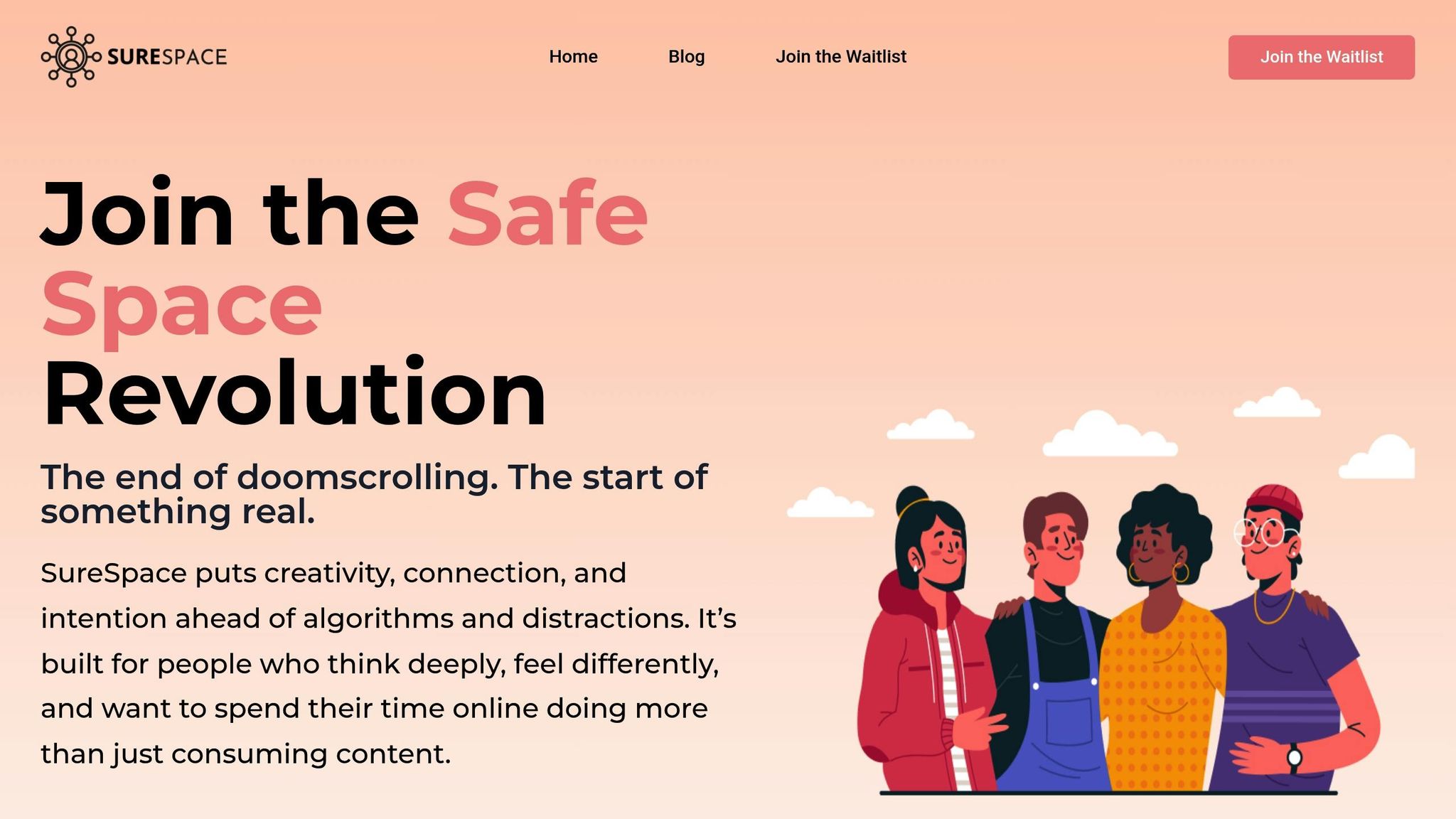
Choosing the right platform can make a big difference in fostering authentic connections. The SureSpace Community App is designed with intentional engagement in mind. It offers an algorithm-free browsing experience, allowing users to discover content based on their interests, not popularity metrics like likes or follower counts. With tools that encourage mindful usage, SureSpace helps users stay focused on meaningful interactions.
Navigating Cultural Sensitivity in Online Interactions
The UAE’s diverse digital space, with residents from over 200 nationalities, provides a unique opportunity to connect across cultures. However, this also requires a conscious effort to respect and understand different backgrounds. Before diving into deeper conversations, take time to learn about the customs and social norms of the cultures you’re engaging with.
Here are some tips to enhance cross-cultural communication:
- Use clear and straightforward language, avoiding slang that might confuse non-native English speakers.
- Be patient when someone is communicating in their second language.
- Ask open-ended questions to encourage detailed and meaningful conversations.
- Be cautious with humour, as it can easily be misinterpreted.
- Consider time zones when scheduling group discussions or meetings.
Active listening is crucial in multicultural settings. Summarising what others share ensures their perspectives are understood and valued. Building real connections online takes time, but creating a safe and inclusive environment where everyone feels respected is well worth the effort.
sbb-itb-a45ffa4
Matching Digital Habits with Personal Values
Aligning your online activities with your personal values can significantly enhance purposeful living. Your digital habits should mirror what truly matters to you. When your online behaviour reflects your core values, it fosters a sense of harmony and brings a deeper sense of satisfaction and fulfilment. This connection is particularly relevant in the UAE, where technology plays a major role in shaping daily life in such a diverse society.
Reviewing Your Digital Behaviours
To make meaningful changes, you first need to understand your current digital habits. Studies show that many young adults spend over 10 hours a day in front of screens, often unaware of how this impacts their mental health. Start by monitoring your digital usage for a week. Use tools like Screen Time on iOS or Digital Wellbeing on Android to track your habits. Pay attention to what triggers your usage, how it makes you feel, and whether it adds value to your life. Keep a simple diary to jot down these observations during a weekly review session.
During your weekly check-in, ask yourself: Was my time online enjoyable? Did it enhance my well-being? Did my digital activities align with my personal priorities, or did they conflict with them?
Understanding the habit loop – cue, routine, reward – can help you identify unhealthy patterns. For instance, boredom (cue) might lead to endless scrolling (routine) for a fleeting sense of relief (reward). Once you spot this cycle, you can replace the routine with healthier alternatives that still address the underlying need. This self-awareness is the first step in turning mindless habits into intentional ones.
Take time to reflect on your core values and assess whether your digital habits support or undermine them. For example, if family connection is a priority, consider that 70% of people report technology disrupts family time. This could point to a misalignment that needs addressing.
Once you’ve identified your patterns, you can adopt strategies to reset and bring your habits in line with your values.
Practical Methods for Digital Detox
A digital detox doesn’t mean giving up technology entirely – it’s about setting intentional boundaries to recharge and focus. Research shows that taking temporary breaks from electronic devices can reduce stress and improve your ability to engage with the world around you.
Scheduled unplugging works better than random breaks. Create tech-free zones in your home or designate specific times during the day to be offline. For example, you might set aside an hour before bedtime for offline activities. You could also dedicate regular detox days to disconnect and engage in face-to-face interactions.
Managing notifications is another way to practise mindful consumption. Turn off non-essential alerts and set specific times for checking messages. This is especially crucial given that 86% of people report that technology negatively affects their well-being.
To build awareness of your digital habits, try incorporating practices like journaling or brief daily meditation sessions. These can help you pause and respond thoughtfully to your digital impulses.
Recommended Resources for Intentional Living
Making changes to your digital habits often requires support, and there are plenty of resources to help. Books on digital wellness can shed light on why we interact with technology the way we do. In the UAE, local wellness initiatives may offer workshops on mindful technology use and strategies for digital detoxing.
Apps like RescueTime can provide detailed insights into your digital habits and help you track your progress. You might also find value in joining online communities focused on intentional living. For example, the SureSpace Community App offers a distraction-free environment for meaningful engagement without the pressure of likes or follower counts.
If you find it difficult to change long-standing habits, consider seeking guidance from digital wellness coaches or therapists who can offer tailored strategies. Regular reflection is crucial – set monthly reminders to evaluate whether your technology use still aligns with your evolving goals and values.
Resources and Tools for Intentional Digital Living
To embrace intentional digital living, having the right tools is key. These tools not only help you build meaningful digital habits but also support your overall well-being. Below, you’ll find a carefully selected range of resources designed to encourage mindful technology use and help you stay focused on what matters most.
Apps for Intentional Digital Use
One standout option is the SureSpace Community App, which prioritises genuine connections over superficial interactions. Unlike traditional social media platforms that revolve around likes and follower counts, SureSpace offers a distraction-free environment for meaningful conversations and purpose-driven content. Whether you’re searching for content, sharing your thoughts, or connecting with like-minded individuals, the app ensures that your experience is free from unnecessary noise.
SureSpace focuses on authentic engagement. Its curated news feed highlights quality over quantity, allowing you to thoughtfully manage your content. Plus, notifications are tailored to highlight genuine interactions, making it easier to stay connected without feeling overwhelmed. It’s a tool perfectly aligned with the principles of mindful digital living.
SureSpace Community App Features Comparison
To help you decide which plan fits your needs, here’s a breakdown of the features offered by SureSpace:
| Feature | Free Plan | Premium Plan |
|---|---|---|
| Search and post content | ✓ | ✓ |
| Explore curated news feed | ✓ | ✓ |
| Like, comment, and connect | ✓ | ✓ |
| Basic notifications | ✓ | ✓ |
| Personal content storage | Limited | Enhanced |
| Content management tools | Basic | Advanced |
| Customer support | Standard | Priority |
| Community features | Full access | Full access |
The free plan is an excellent starting point for cultivating intentional digital habits, offering all the essential features for building real connections. For those who want added control over their content and access to priority support, the premium plan provides enhanced tools to elevate your experience.
Both plans are designed to keep distractions at bay, promoting genuine interactions and purposeful engagement.
Books and Community Initiatives
For a more well-rounded approach to intentional digital living, consider exploring books and local initiatives that align with your values. In the UAE, several programmes and resources are available to support mindful technology use:
- The UAE Council for Digital Wellbeing offers a digital wellbeing support line, providing professional guidance on managing technology in everyday life.
- The National Programme for Happiness and Wellbeing has published content focusing on happiness and the impact of technology, reflecting the UAE’s dedication to promoting balanced digital habits.
Books by Thich Nhat Hanh are another valuable resource. His teachings on mindfulness provide practical insights into living with intention, which can be directly applied to how you interact with technology. Parents might also find the "My Brain Books" series helpful. Designed for children aged 5–10, this series introduces emotional intelligence and mindful technology use. As author Orlanda explains:
"I hope these books plant seeds that grow into resilience and emotional wellbeing in children’s lives".
The series is available as a bundle for approximately AED 256.50, with individual books priced at around AED 69.70 each.
For those interested in live events, Mindvalley Live Dubai regularly hosts gatherings featuring speakers on mindfulness, brain performance, and personal growth. These events are a great way to connect with others who share your interest in intentional living and to gain practical strategies for applying these principles.
Finally, supporting initiatives like the Kalimat Foundation can be a meaningful way to use technology for good. This organisation focuses on providing books to disadvantaged and visually impaired children, particularly in conflict zones. By contributing to such causes, you can make your digital habits more purposeful and impactful.
To make the most of these resources, try incorporating them into your weekly routine. Whether it’s reading a chapter from a mindfulness book, attending a workshop, or evaluating your digital habits, these tools can help you stay on track toward a more intentional and balanced digital life.
Conclusion
Living intentionally in the digital age isn’t just about cutting back on screen time – it’s about reshaping how technology fits into your life to create a more balanced and fulfilling experience. This guide offers practical strategies to help you rethink your digital habits. As digital minimalism advocate Eli’s Place puts it:
"Digital minimalism is more than just a passing trend. It’s a critical shift toward prioritising mental health in an increasingly online world".
The numbers back this up: excessive screen time is linked to anxiety, depression, and sleep issues. In fact, 79% of adults aged 18–22 report feeling lonely. These stats underline the importance of taking control of your digital life.
The first step? Setting boundaries. Simple changes, like designating no-tech zones at home or limiting social media checks to specific times, can work wonders for your mental clarity and sleep. Boundaries aren’t about restriction – they’re about using technology in a way that enhances your life. For instance, the SureSpace Community App offers a focused, distraction-free platform to build meaningful connections while minimising the noise of constant notifications. As Erin Kerns Vazquez of Medens Health notes:
"Technology may have undeniable benefits, but it makes human connection and face-to-face interaction more important than ever for our mental and emotional well-being".
Start small. Maybe that means keeping your mealtimes device-free or using SureSpace’s tools to manage notifications effectively. Over time, these small adjustments can lead to major improvements. Remember, the goal isn’t to ditch technology altogether but to align its use with what truly matters to you.
Tools like the SureSpace Community App are especially helpful in fostering connections that respect local customs and encourage genuine interaction. They serve as a reminder that technology, when used thoughtfully, can support – not hinder – your well-being.
Ultimately, your digital habits shape your everyday life. By adopting a more intentional approach, you’re doing more than improving your relationship with technology. You’re prioritising your mental health, nurturing your relationships, and enhancing your overall quality of life. The strategies shared here are a starting point, but the path forward is yours to define.
FAQs
What are some simple steps to start living more intentionally in the digital world if I feel overwhelmed by my current habits?
If you’re feeling like your digital habits are taking over, the best way forward is to start with small, simple changes. For instance, try setting specific times during the day to unplug – like during meals or an hour before you go to bed. This can help you create clear boundaries and cut down on screen time.
Shift your focus to enjoying offline activities that bring you happiness and balance. Whether it’s going for a walk, picking up a new hobby, or spending quality time with family and friends, these moments can help you stay present and reduce your reliance on digital devices.
The goal of intentional digital living is to make your online habits match your personal priorities and values. Take it one step at a time, stay consistent, and you’ll gradually build a healthier, more balanced relationship with technology.
How can I create a mindful and meaningful digital environment that reflects my personal values?
Creating a balanced digital space begins with setting clear goals for how you engage online. Take a moment to think about whether your digital habits align with what matters most to you. Establishing boundaries – like limiting your screen time or scheduling device-free moments – can help you stay grounded and more present in both your virtual and real-world interactions.
Taking regular digital breaks can also work wonders for maintaining balance and nurturing face-to-face connections. Be intentional with your tech use by focusing on platforms and tools that genuinely enrich your life. Practising mindfulness online – such as pausing to think before replying to messages – can make your digital interactions more meaningful and less reactive.
By incorporating these practices, you can create a thoughtful and balanced digital lifestyle that prioritises your well-being while honouring the cultural values of the UAE.
How does the SureSpace Community App support mindful digital interactions and help minimise digital stress?
The SureSpace Community App is designed to cultivate mindful and meaningful interactions online. It invites users to share content with purpose, engage in thoughtful conversations, and connect with others who hold similar values and interests.
By promoting intentional use, the app aims to reduce digital stress and create a more balanced, genuine online experience that aligns seamlessly with your personal goals and priorities.

